Semiconductor manufacturing technology is the cornerstone of modern electronics, enabling the production of integrated circuits (ICs) that power everything from smartphones to supercomputers. This intricate process involves a series of precisely controlled steps, transforming raw silicon into highly functional microchips. At its core, the technology relies on photolithography, etching, deposition, and doping, among other techniques, to create microscopic electronic components on a silicon wafer.
The journey begins with silicon purification, where raw silicon is refined to achieve a purity of over 99.9999%. This high-purity silicon is then melted and grown into cylindrical ingots through the Czochralski method. These ingots are sliced into thin wafers, typically 300mm in diameter, which serve as the substrate for chip fabrication. Each wafer undergoes rigorous cleaning to remove contaminants, as even a single particle can disrupt the manufacturing process.
Photolithography is the key patterning technique, using ultraviolet (UV) or extreme ultraviolet (EUV) light to transfer circuit designs onto the wafer. A photosensitive layer called photoresist is applied, and light passes through a photomask (containing the circuit pattern), hardening or softening the resist depending on the exposure type. The unexposed or exposed areas are then removed, leaving a patterned resist layer that acts as a mask for subsequent etching. Etching, either wet (using chemical solutions) or dry (using plasma), removes the unprotected silicon or dielectric layers, defining the circuit’s geometry.
Deposition techniques, such as chemical vapor deposition (CVD) and physical vapor deposition (PVD), add thin films of materials like silicon dioxide, silicon nitride, or metal layers. These films serve as insulators, conductors, or protective barriers. Doping, achieved through ion implantation or diffusion, introduces impurities (e.g., boron or phosphorus) into the silicon to alter its electrical properties, creating n-type or p-type regions essential for transistors.
After multiple layers of patterning, etching, and deposition, the wafer undergoes chemical-mechanical polishing (CMP) to planarize the surface, ensuring uniformity for subsequent steps. Transistor formation, the heart of the chip, involves creating source, drain, and gate regions, with advanced nodes (e.g., 3nm, 5nm) using FinFETs or GAAFETs (Gate-All-Around FETs) to enhance performance and reduce power consumption.
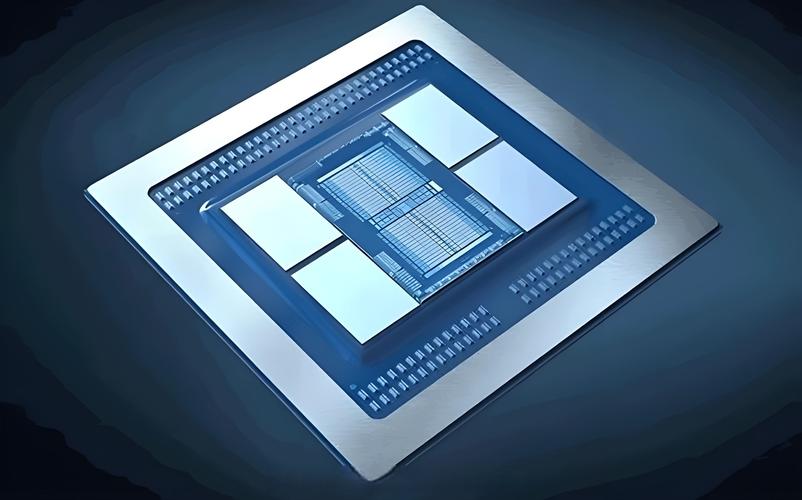
Interconnect fabrication follows, where metal layers (typically copper) are deposited and patterned to connect transistors. Low-k dielectric materials are used to reduce capacitance and signal delay. Finally, the wafer is tested to identify functional dies, which are then separated (dicing) and packaged to protect the chip and provide electrical connections.
Key stages of semiconductor manufacturing can be summarized as follows:
| Stage | Key Processes | Purpose |
|---|---|---|
| Wafer Preparation | Silicon purification, ingot growth, wafer slicing | Create a clean, uniform silicon substrate |
| Photolithography | Photoresist application, exposure, development | Transfer circuit patterns onto the wafer |
| Etching | Wet/dry etching | Remove unwanted material to pattern circuits |
| Deposition | CVD, PVD, ALD | Add thin films of insulators, conductors, etc. |
| Doping | Ion implantation, diffusion | Modify electrical properties of silicon |
| Transistor Formation | Gate, source, drain patterning | Create basic switching elements (transistors) |
| Interconnect Fabrication | Metal deposition, CMP, low-k dielectrics | Connect transistors to form functional circuits |
| Testing & Packaging | Wafer testing, dicing, packaging | Ensure functionality and protect the chip |
The semiconductor industry continually advances toward smaller nodes, higher transistor density, and improved energy efficiency. However, challenges such as quantum effects at nanoscale dimensions, extreme ultraviolet (EUV) lithography costs, and supply chain complexities persist. Innovations like 3D stacking, advanced packaging (e.g., Chiplet technology), and new materials (e.g., graphene) are being explored to overcome these hurdles and meet the growing demand for powerful, miniaturized electronics.
FAQs
-
What is the difference between photolithography and etching in semiconductor manufacturing?
Photolithography is the process of transferring a circuit pattern from a photomask onto the wafer using light and photoresist, creating a template. Etching, on the other hand, removes the unprotected areas of the wafer (or deposited layers) based on the pattern defined by photolithography, physically shaping the circuit structures. While photolithography defines the "design," etching executes the "sculpting" of the chip. -
Why are smaller semiconductor nodes (e.g., 3nm vs. 7nm) considered a significant advancement?
Smaller nodes allow for more transistors to be packed into a given area, increasing chip performance and functionality. They also reduce power consumption and signal delay, enabling faster, more energy-efficient devices. However, smaller nodes require more advanced manufacturing techniques (e.g., EUV lithography) and face greater challenges related to heat dissipation and quantum effects, making their development complex and costly.